How to choose the right adhesive for every DIY project (Ireland guide)
Choosing the right adhesive for your DIY project in Ireland is essential for achieving strong, long-lasting and reliable results.
The Irish climate, varied building materials and mix of modern and traditional construction mean that using the wrong product can quickly lead to weak joints, failed repairs or materials separating over time, particularly where moisture, temperature changes and seasonal movement are involved.
Adhesives vary significantly in strength, flexibility, curing time and suitability for different materials such as timber, MDF, metal, stone and masonry.
Some are designed for precise joinery work, others for heavy structural loads, and others still for fast installation where immediate grip is essential.
Understanding these differences helps you select the correct product first time, avoid unnecessary rework, reduce material waste and achieve a professional-quality finish that performs over time.
This guide explains how to choose the best adhesive for DIY, carpentry and construction projects in Ireland, helping you reduce failures, improve durability and work more efficiently across both interior and exterior applications in real-world conditions.
If your priority is creating a waterproof or weatherproof seal rather than bonding materials together, take a look at our companion guide: How to choose the right sealant for every DIY project (Ireland guide)
Adhesive vs Sealant (difference explained)
Understanding the difference between adhesives and sealants is essential when selecting the right product, as they are often confused but behave very differently once applied and cured.
Adhesives are designed for permanent bonding where strength, structural performance and load-bearing capability are the priority.
They are intended to hold materials together under stress, vibration and long-term use, effectively turning separate components into a single bonded structure.
Sealants, covered in our companion guide: How to choose the right sealant for every DIY project (Ireland guide), are designed to fill gaps, prevent water ingress and accommodate movement in building materials caused by thermal expansion, vibration, settling and general environmental exposure.
While some modern hybrid products combine both functions, the fundamental distinction remains:
Adhesive = strong bonding and structural fixing
Sealant = flexibility, waterproofing and movement protection
If your project involves fixing, assembly, mounting or load-bearing work, an adhesive is almost always the correct and most durable choice.
Which adhesive should you use for different materials?
One of the most common reasons adhesives fail isn't because the product is poor quality, it's because the wrong adhesive has been selected for the material being bonded.
Different materials have different surface characteristics, porosity and flexibility, so choosing an adhesive designed for the substrate is just as important as applying it correctly.
The guide below highlights suitable adhesive types for some of the most common DIY and construction materials.
|
Material |
Recommended Products |
Why they're suitable |
|
Timber |
Specifically formulated for strong timber-to-timber bonding. |
|
|
MDF |
Mitre Fast Kit Standard, Mitre Fast Large Jumbo Bonding Kit, Maximum Torque Adhesive |
Excellent for furniture assembly, trims and precision joinery. |
|
uPVC |
Tec 7 Adhesive, CT1 TRIBRID® Sealant & Construction Adhesive, Fix ALL High Tack Invisible |
High adhesion with slight flexibility for modern building materials. |
|
Acrylic |
Trans Clear Sealing Adhesive Tec7, Fix All Crystal Sealant Adhesive |
Strong clear bond without affecting appearance. |
|
Glass |
Trans Clear Sealing Adhesive Tec7, Fix All High Tack Invisible |
Ideal where an almost invisible bond is required. |
|
Metal |
Tec 7 Adhesive, CT1 TRIBRID® Sealant & Construction Adhesive, Maximum Torque Adhesive |
Excellent strength for construction and repair work. |
|
Concrete & masonry |
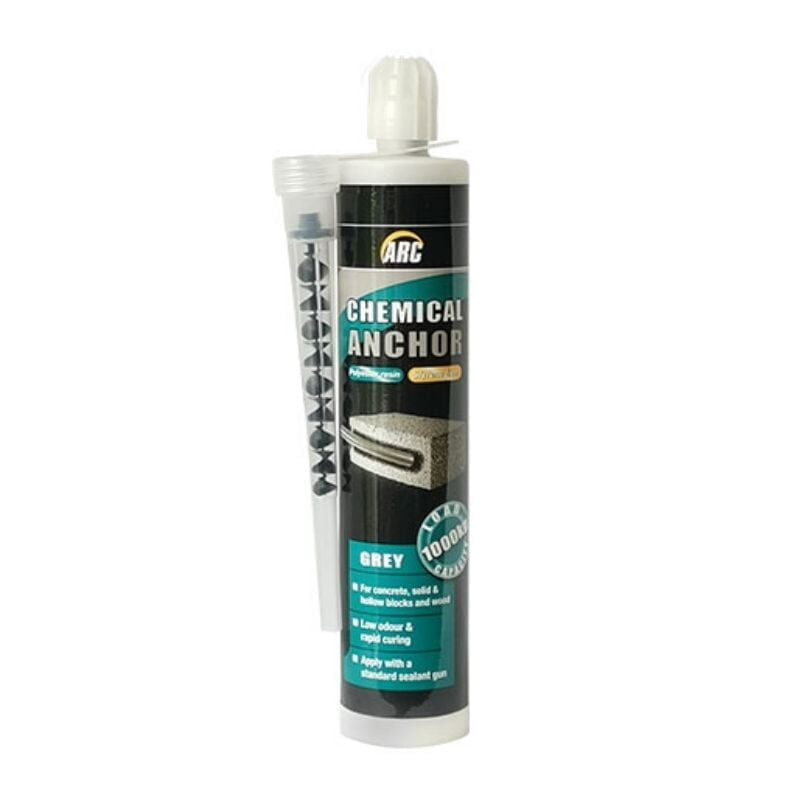
Tec 7 Adhesive, CT1 TRIBRID® Sealant & Construction Adhesive, Arc Chemical Anchor (where structural fixing is required) |
High-strength bonding for demanding applications. |
|
Ceramic tiles |
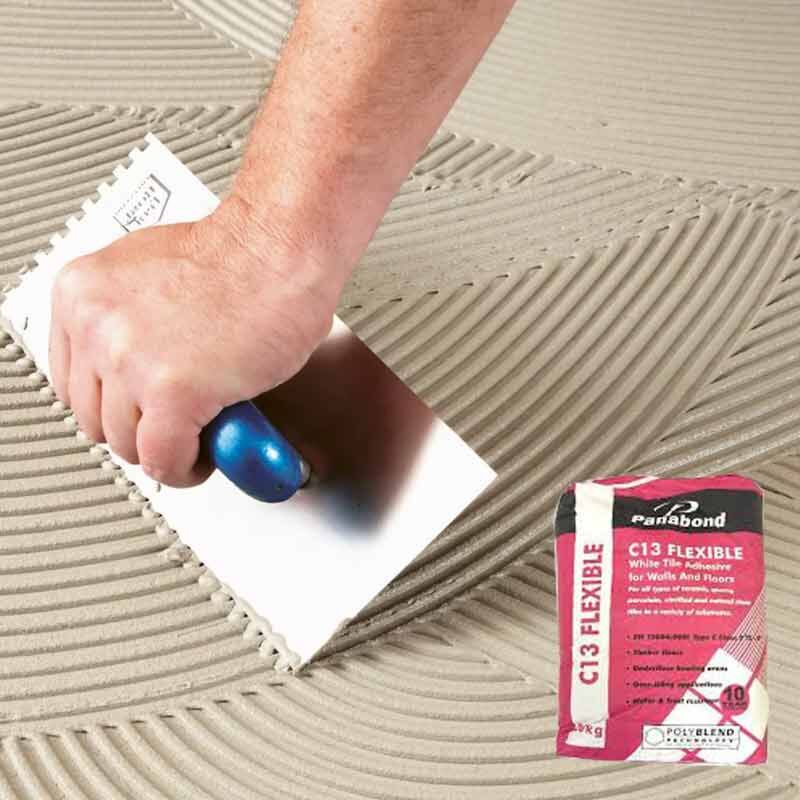
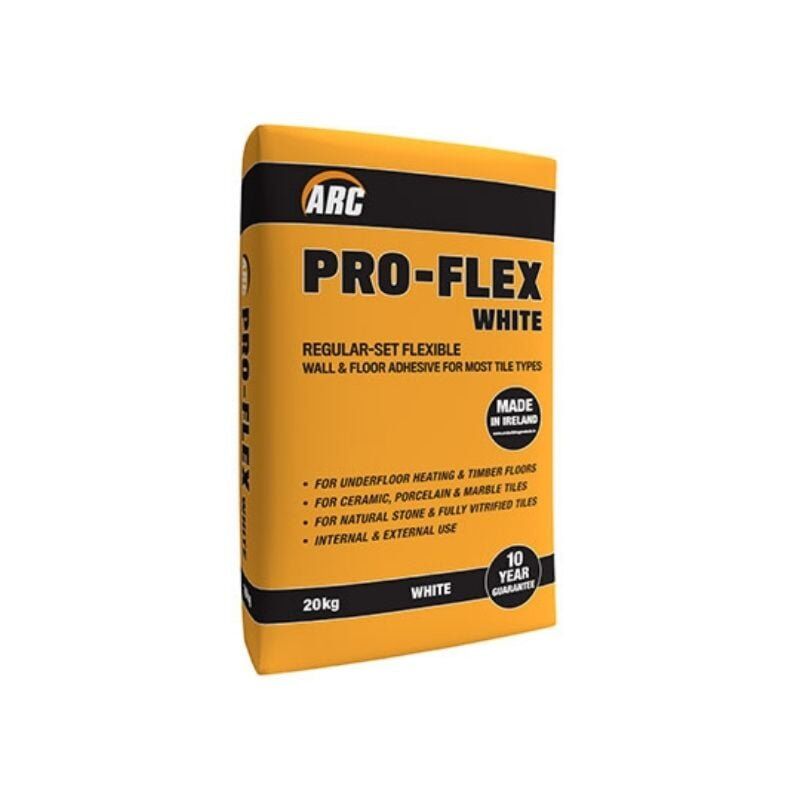
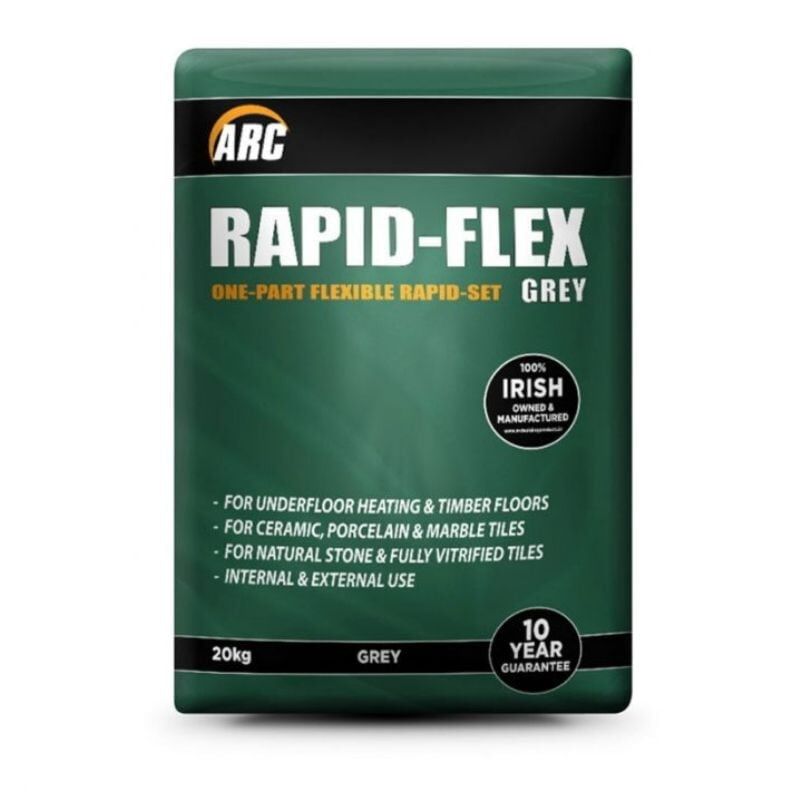
Arc Pro Flex Tile Adhesive, Arc Rapid Flex Tile Adhesive, C13 Wall Floor Tile Adhesive |
Formulated specifically for reliable tile installation. |
Selecting an adhesive that's compatible with both materials helps achieve a stronger bond, improves long-term durability and reduces the likelihood of failure caused by movement, moisture or unsuitable application.
-
-
-
-
-
-
-
-
-
-
-
-
-
- Mitre Fast Kit Standard Std 200ml€11.99 €9.75
Bonding plastics: Why they are different
Plastic materials often present the biggest challenge when choosing an adhesive because not all plastics behave the same way.
Some plastics bond very easily, while others are naturally resistant to adhesives.
Rigid plastics such as PVC (uPVC) and acrylic generally bond well using modern hybrid construction adhesives such as Tec 7 Adhesive, CT1 TRIBRID® Sealant & Construction Adhesive, Fix ALL High Tack Invisible and Trans Clear Sealing Adhesive Tec7, depending on the application.
However, plastics such as polypropylene (PP) and polyethylene (PE) are much more difficult to bond because they have very low surface energy.
Many general-purpose adhesives struggle to achieve a permanent bond on these materials without specialist primers or surface treatments.
Whenever you're working with an unfamiliar plastic, it's worth checking the manufacturer's recommendations before selecting an adhesive.
Choosing the correct product from the outset is far more reliable than trying to compensate for poor adhesion later.
Best wood adhesives for carpentry and joinery in Ireland
Wood adhesives are widely used in carpentry, joinery and furniture repair across Ireland, where strong internal bonding between timber surfaces is essential for structural integrity and long-term performance in both domestic and commercial settings.
In many cases, a properly applied wood adhesive forms a bond that is stronger than the surrounding timber fibres once fully cured, making product choice and application technique critical.
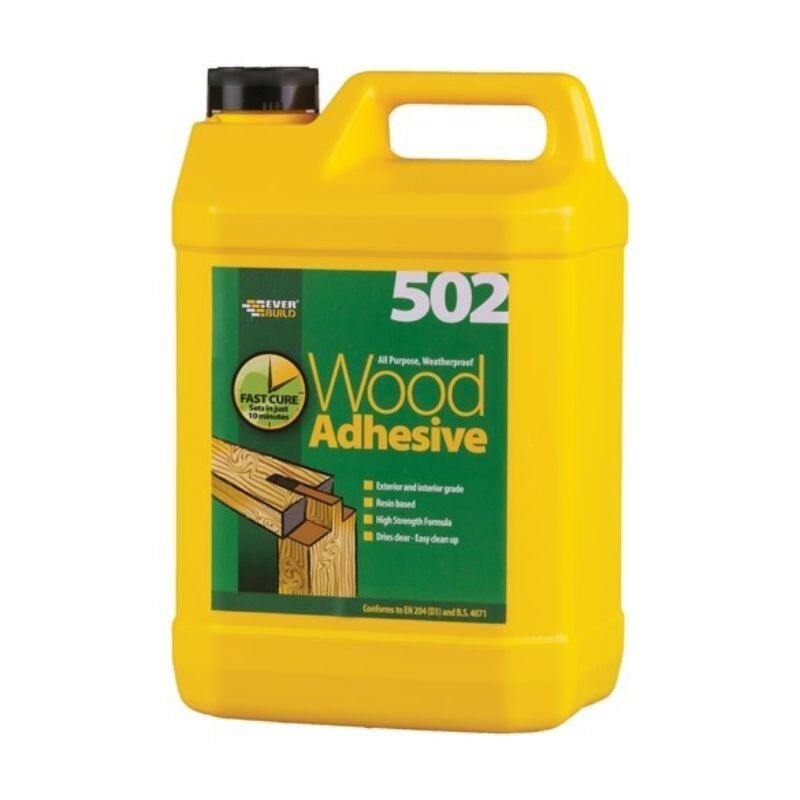
For everyday woodworking and carpentry work, Everbuild 502 Wood Adhesive is a reliable PVA wood glue suitable for furniture repair, light construction and general interior joinery.
It performs consistently across a wide range of common Irish building timbers and is ideal for both DIY users and professional trades.
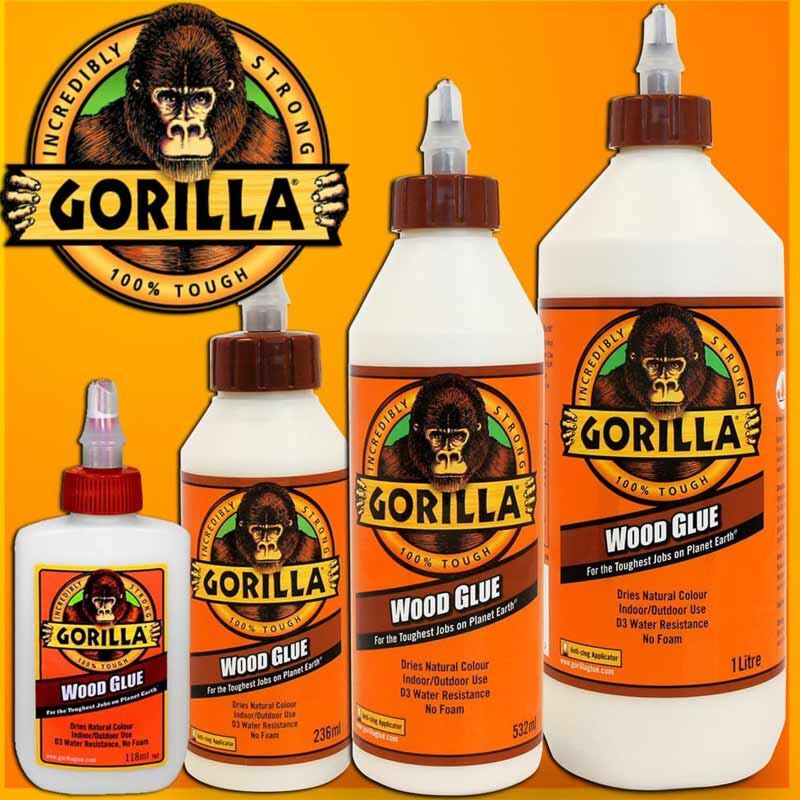
For stronger bonding with improved moisture resistance, Gorilla Wood Glue offers enhanced durability for interior projects and light exterior applications where occasional moisture exposure may occur.
It is particularly useful in utility areas, garden structures or semi-exposed timber installations where standard interior PVA adhesives may degrade over time.
Common applications include:
- Softwood and hardwood timber joints
- Furniture assembly and structural repair
- Cabinetry, shelving and trim work
- General carpentry and woodworking repairs
- Interior restoration and joinery upgrades
For best results, timber surfaces should always be clean, dry and free from dust, oil, paint residue or contaminants that can weaken adhesion.
Proper clamping during curing is essential to achieve maximum bond strength, as sustained pressure ensures full contact between surfaces and eliminates weak voids within the joint as the adhesive sets and cures.
Best adhesives for MDF and furniture assembly
MDF and furniture assembly projects require adhesives that provide strong bonding performance combined with reliable initial grab to prevent movement during installation.
This is especially important for pre-cut boards, factory-finished components and precision joinery work where even small misalignments can affect the final appearance and structural integrity.
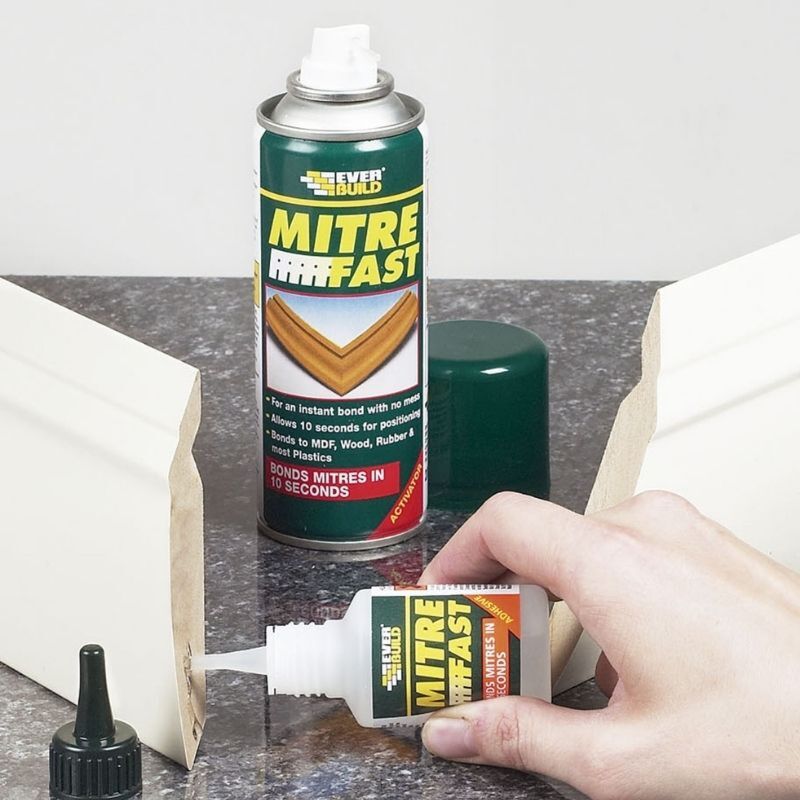
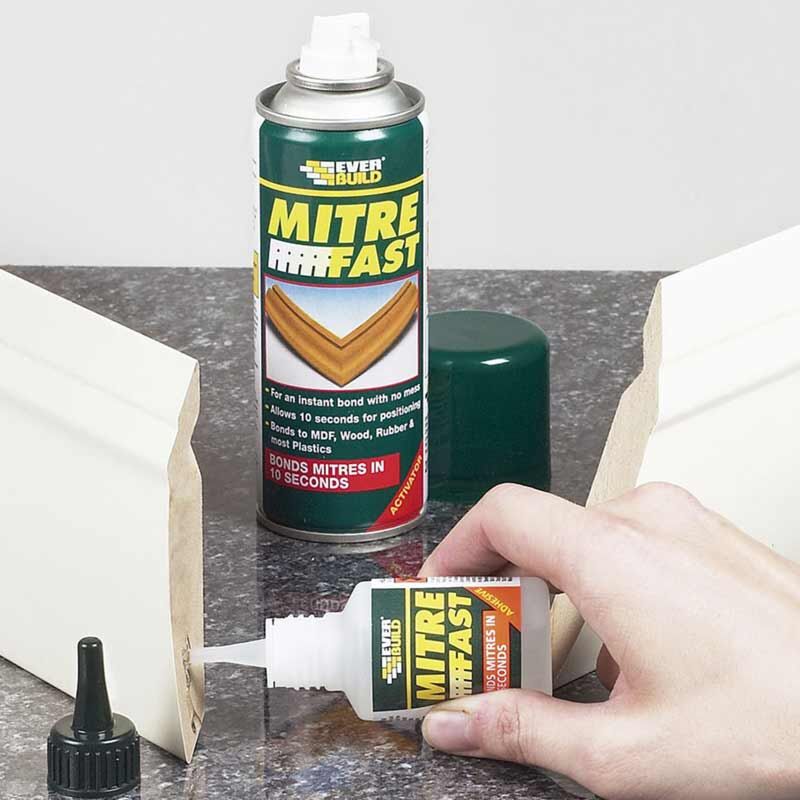
For fast-setting MDF bonding, Mitre Fast Kit Standard and Mitre Fast Large Jumbo Bonding Kit provide an instant-bond system combining adhesive and activator.
This creates near-immediate grab on contact, significantly reducing installation time and improving accuracy, particularly in on-site environments where speed and precision are essential.
These are ideal for:
- MDF trims, architraves and mouldings
- Skirting boards and finishing carpentry
- Furniture assembly and structural repairs
- Mitre joints requiring precise alignment
- Internal decorative joinery and fitting work
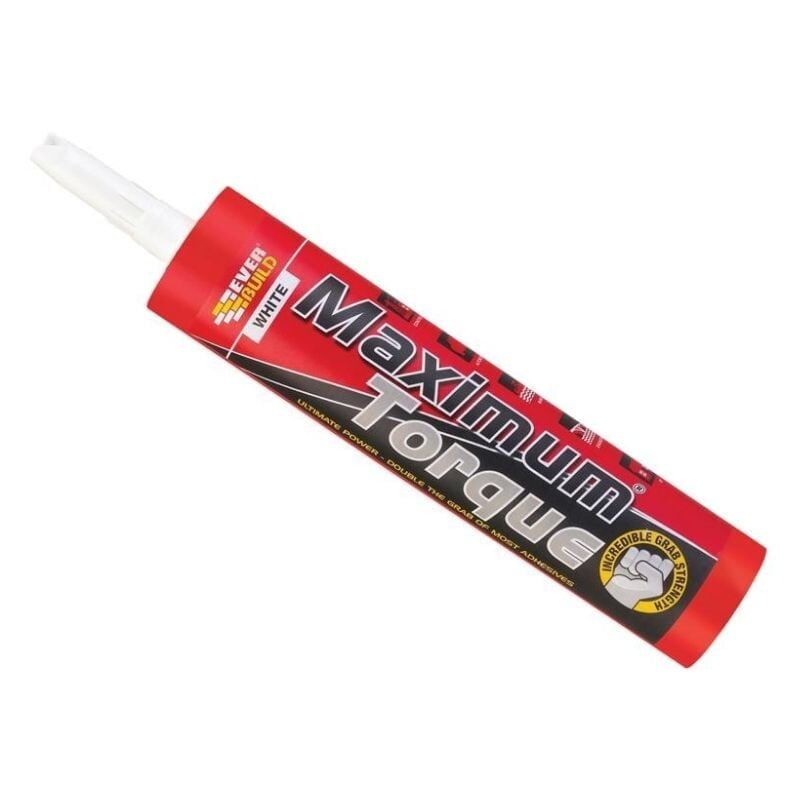
For applications requiring longer adjustment time, Maximum Torque Adhesive is ideal for heavier MDF and composite board installations.
It allows controlled positioning before full cure, making it especially useful where alignment adjustments are needed during fitting or where larger surface areas require careful placement before final bonding strength develops.
- Mitre Fast Kit Standard Std 200ml€11.99 €9.75
-
-
Heavy-duty construction adhesives for structural bonding
When strength, durability and long-term performance are essential, heavy-duty construction adhesives are the preferred choice for demanding fixing and bonding applications.
Many modern construction adhesives are hybrid formulations, meaning they not only provide exceptional bonding strength but also offer flexibility and weather resistance, making them suitable for both interior and exterior use.
These products are engineered to perform under stress, accommodate natural movement and withstand exposure to moisture and changing weather conditions.
They are particularly useful where screws or nails are not practical or desirable, helping to create a cleaner finish while reducing the need for mechanical fixings.
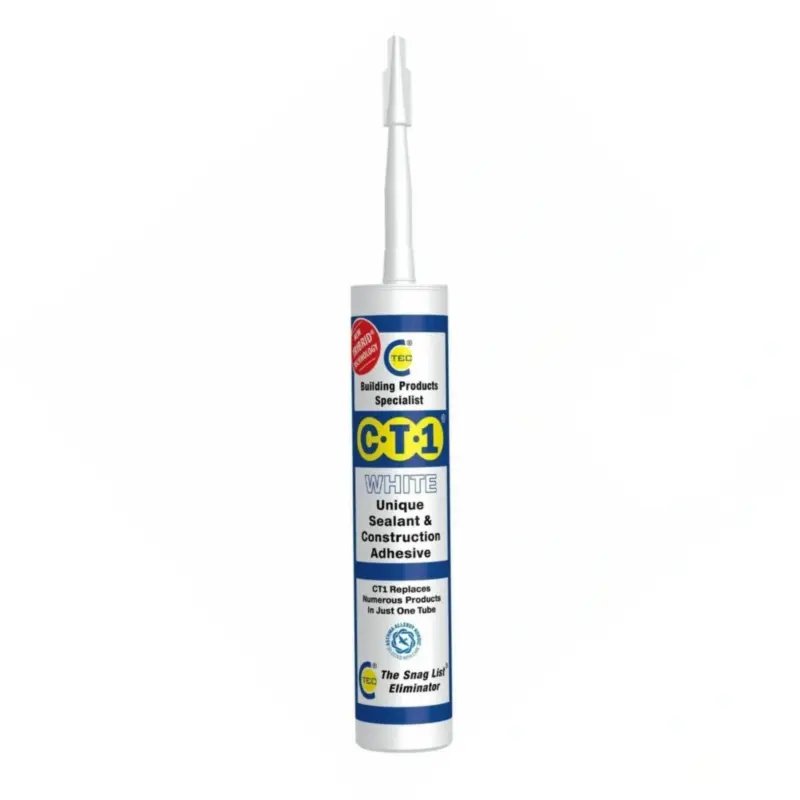
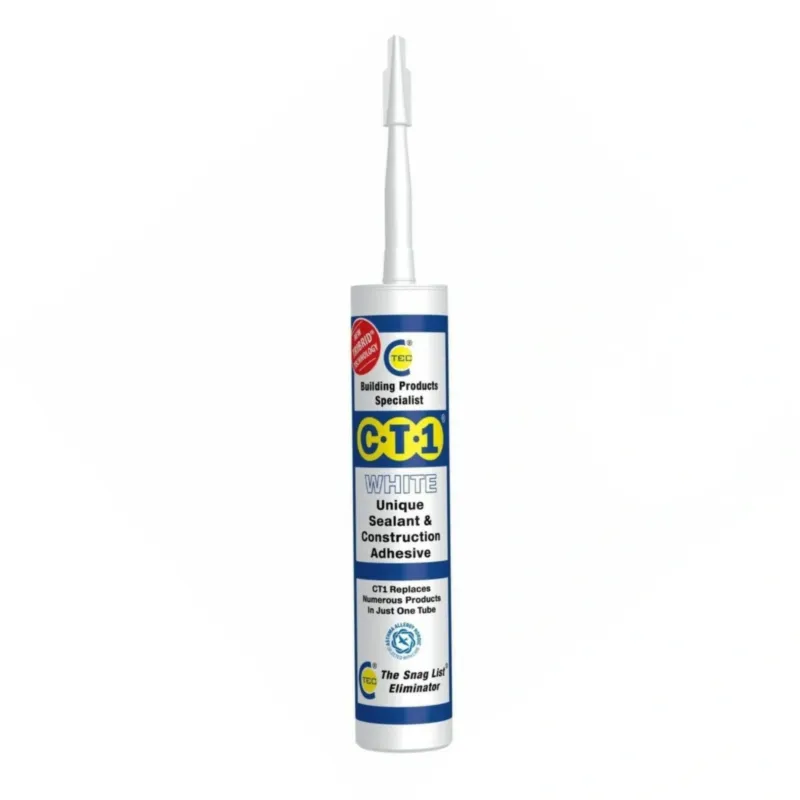
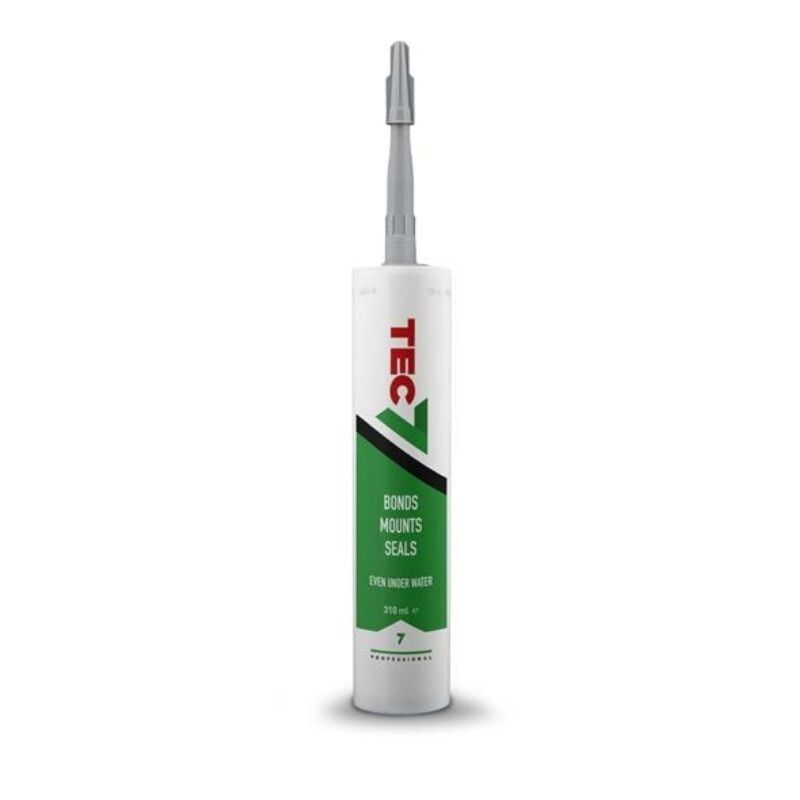
Among the most versatile options are CT1 TRIBRID® Sealant & Construction Adhesive and Tec 7 Adhesive.
Although both products also have sealing capabilities, they are widely used as high-performance construction adhesives thanks to their excellent grab, strong bond strength and ability to adhere to a wide variety of building materials.
Typical applications include:
- Skirting boards, architraves and wall panelling
- Bonding timber, metal, stone and masonry
- Exterior trims and weather-exposed construction fixing
- General building repairs, refurbishment and maintenance
- Heavy-duty interior and exterior installations
These hybrid construction adhesives are widely used across Irish construction and renovation projects where long-term structural performance, durability and weather resistance are essential.
Clear adhesives for invisible bonding and clean finishes
Clear adhesives are designed for applications where appearance is critical and visible adhesive lines would negatively affect the finished result.
They are widely used in modern interior design, glazing and decorative installations where clean aesthetics and minimal visual disruption are required.
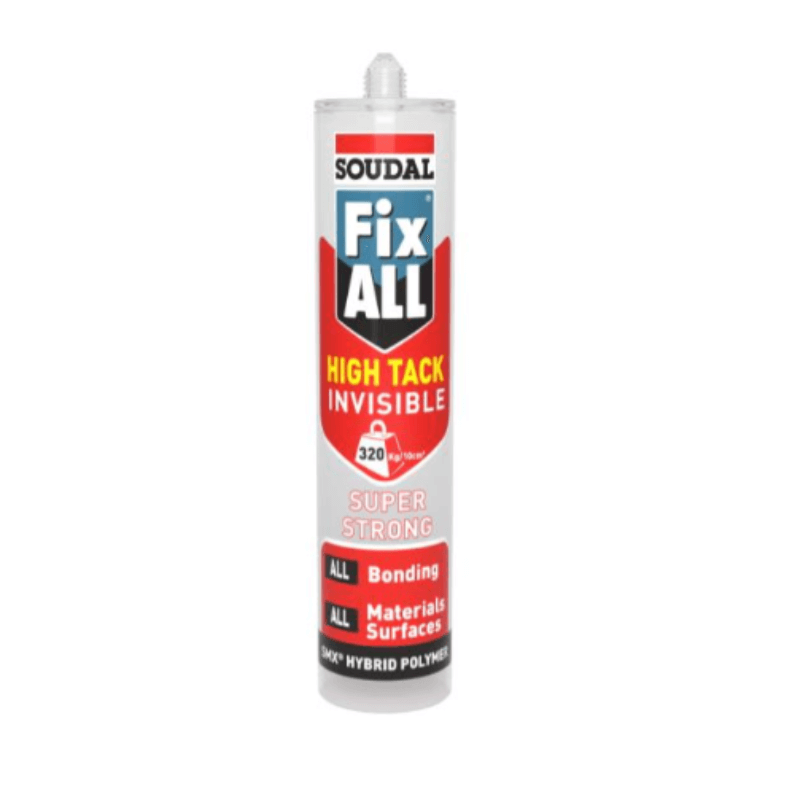
For invisible bonding with strong initial grab, Fix All High Tack Invisible provides reliable performance with a clear finish.
It is particularly useful in interior applications where immediate hold is required without visible adhesive residue affecting the final appearance.
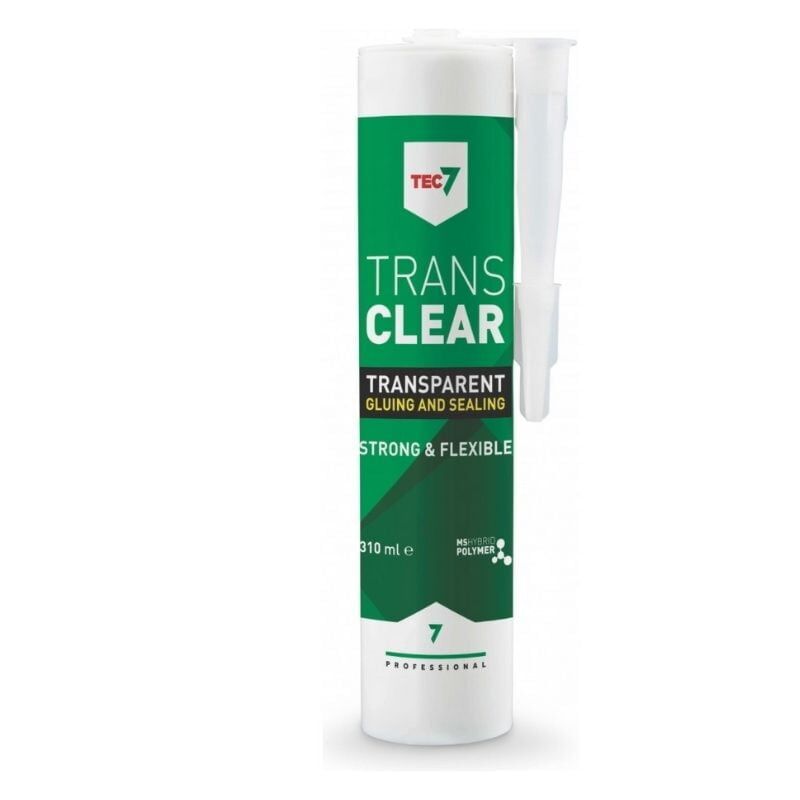
Trans Clear Sealing Adhesive Tec7 is ideal for glass, acrylic, smooth surfaces and decorative finishes, offering strong adhesion while remaining virtually invisible once fully cured.
It is especially suited to design-led environments where seamless visual integration is important.
Common applications include:
- Glass panels, mirrors and splashbacks
- Decorative trims and interior finishing details
- Visible interior joints and fittings
- Architectural and design-focused installations
- High-end interior construction and refurbishment
Construction adhesive vs grab adhesive (key differences)
Although often used interchangeably in Ireland, construction adhesives and grab adhesives serve different functional roles and selecting the wrong type can impact both installation quality and long-term performance.
Grab adhesives are formulated for high initial tack and immediate hold.
This allows materials to be positioned and secured quickly without prolonged temporary support, making them particularly useful for vertical applications such as wall-mounted panels, trims or boards where slippage must be prevented during curing.
Construction adhesives prioritise long-term structural strength and durability.
They typically offer a longer working time, allowing for adjustment and repositioning during installation, making them better suited to load-bearing applications, structural bonding and more complex assemblies.
Some modern products combine both properties, including CT1 TRIBRID® Sealant & Construction Adhesive and Tec 7 Adhesive, offering both immediate grab and long-term bonding performance within a single formulation.
The correct choice ultimately depends on whether the priority is immediate installation support or maximum structural strength once fully cured.
When to use an adhesive that also seals (hybrid adhesives)
Many modern construction and renovation projects in Ireland require not only bonding strength but also waterproofing, flexibility and resistance to long-term movement and environmental exposure.
This is particularly important in areas exposed to moisture, temperature fluctuations and building movement.
Hybrid adhesive sealants combine both bonding and sealing functions in one product, reducing the need for multiple materials on site, simplifying installation and improving overall efficiency.
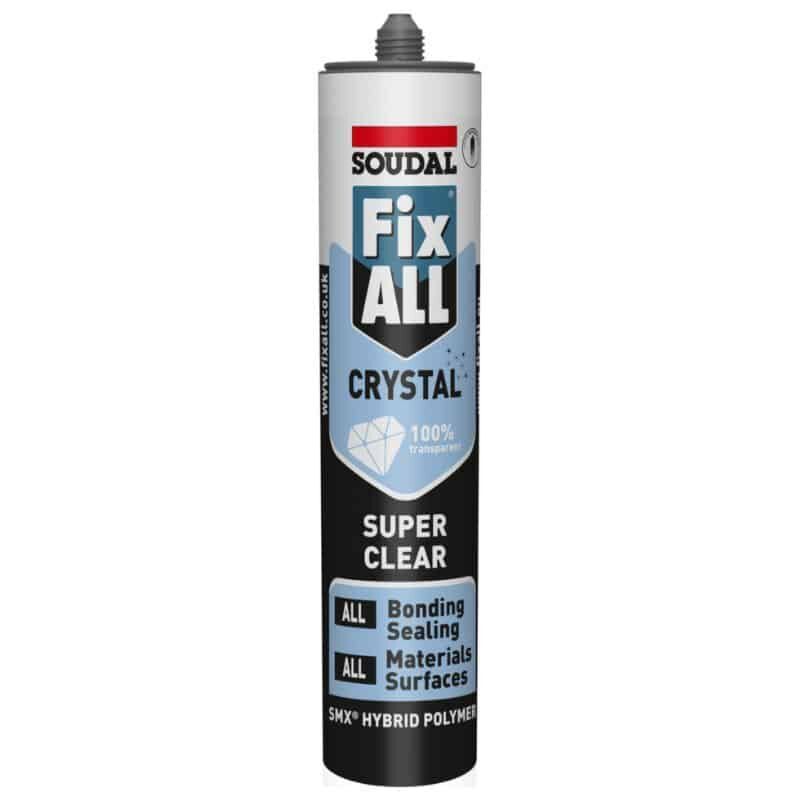
Key products include CT1 TRIBRID® Sealant & Construction Adhesive and Fix All Crystal Sealant Adhesive, both of which deliver strong bonding performance alongside waterproof sealing capability for demanding applications.
Ideal applications include:
- Bathrooms, showers and kitchens
- Window and door installations
- Exterior trims and weather-exposed joints
- Mixed-material bonding and sealing applications
- Renovation and refurbishment projects
Hybrid adhesives help streamline installation workflows, reduce product usage and deliver a more efficient, professional finish with improved long-term reliability in challenging environments.
Common adhesive mistakes (and how to avoid them)
Many adhesive failures in DIY and construction projects in Ireland are caused not by poor product quality, but by incorrect application, inadequate preparation or unsuitable usage conditions in real-world environments.
Incorrect adhesive quantity
Using too little adhesive results in weak joints and insufficient surface contact, while excessive adhesive can prevent proper curing, trap moisture and create messy squeeze-out that affects both strength and finish quality.
Poor surface preparation (most common issue)
Dust, grease, moisture or loose material can significantly reduce adhesion performance.
Adhesives bond to contamination rather than the substrate itself, leading to weak or failing joints.
Proper cleaning and drying are essential before application.
Ignoring curing times
Every adhesive requires sufficient curing time to reach full strength.
Disturbing or loading joints too early can permanently weaken performance, even if the surface appears dry or set.
Incorrect product selection
Choosing the wrong adhesive for the application is one of the most common causes of bond failure.
Even high-quality adhesives can underperform if they're used on unsuitable materials or where movement, moisture or loading conditions haven't been considered.
Common mistakes include:
- Using wood glue outdoors without adequate protection against moisture.
- Using grab adhesives for structural or load-bearing applications.
- Using rigid adhesives in areas subject to movement or vibration.
- Using a wood adhesive on non-porous materials such as plastic or metal.
- Assuming all plastics can be bonded using the same adhesive.
- Failing to check that the adhesive is suitable for both materials being joined.
Some materials require particular attention. While timber, MDF, masonry and many metals are generally straightforward to bond using the correct adhesive, certain plastics can be far more challenging.
PVC and acrylic usually bond well with modern hybrid construction adhesives, whereas plastics such as polypropylene (PP) and polyethylene (PE) often require specialist adhesives or primers because of their naturally low surface energy.
Selecting an adhesive that's compatible with both materials being joined is one of the simplest ways to achieve a stronger bond and improve long-term durability.
Over-reliance on adhesive alone
Some applications still require mechanical fixing or combined installation methods, particularly where weight, safety or long-term stress is involved.
Key principle
Surface preparation is often more important than the adhesive itself. Even the highest-grade adhesive will underperform if applied to an unsuitable or contaminated surface.
Adhesive quick reference guide
|
Job Type |
Recommended Adhesive Type |
Example Products |
|
Woodworking |
PVA wood adhesive |
|
|
MDF & trims |
Instant / mitre adhesive |
|
|
Fast grab installations |
Rapid grab adhesive |
|
|
Heavy construction |
Structural adhesive |
|
|
Clear finishing |
Transparent adhesive |
|
|
Mixed sealing + bonding |
Hybrid adhesive |
|
|
Plastic & uPVC bonding |
Hybrid construction adhesive |
-
-
-
-
-
-
-
-
-
-
-
-
-
- Mitre Fast Kit Standard Std 200ml€11.99 €9.75
Need expert help choosing the right adhesive?
Choosing the right adhesive depends on understanding the specific demands of your project, including material type, load requirements, curing time, environmental exposure and long-term performance expectations.
Selecting the correct product ensures stronger bonds, fewer failures and a more professional finish that lasts in real-world Irish conditions.
If your project is more focused on waterproofing, sealing or movement accommodation rather than structural bonding, you may also find our companion guide useful: How to choose the right sealant for every DIY project (Ireland guide)
If you are unsure which adhesive is best for your project, our team can provide expert, practical advice to help you choose the right product and complete your job correctly first time.