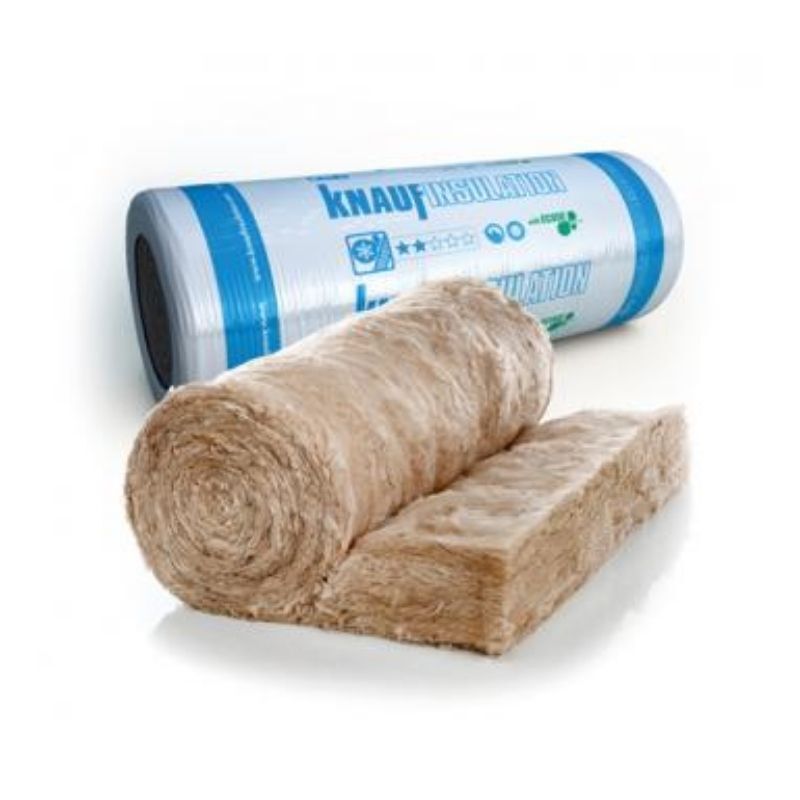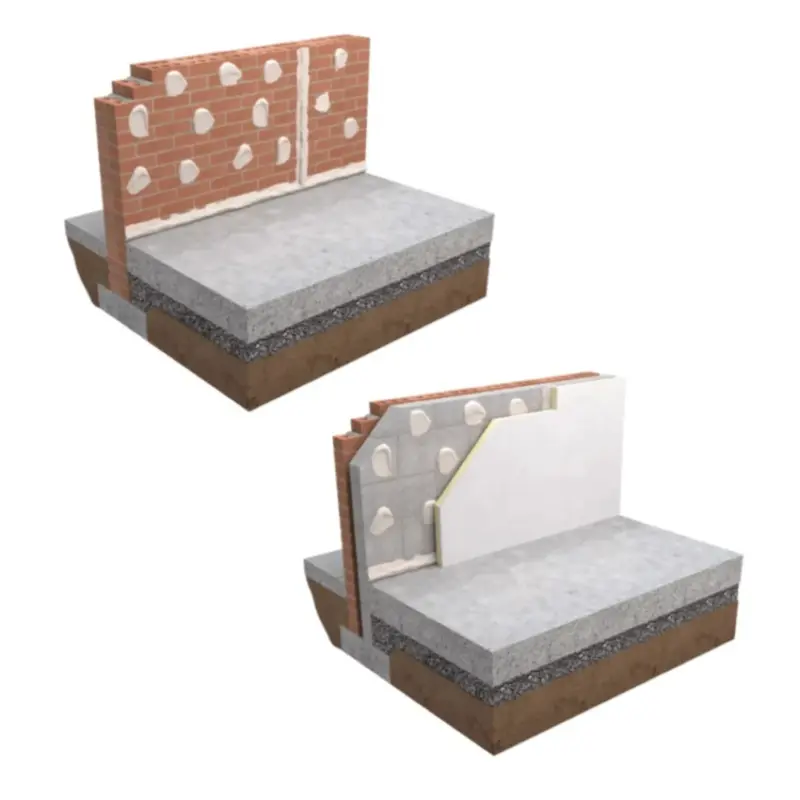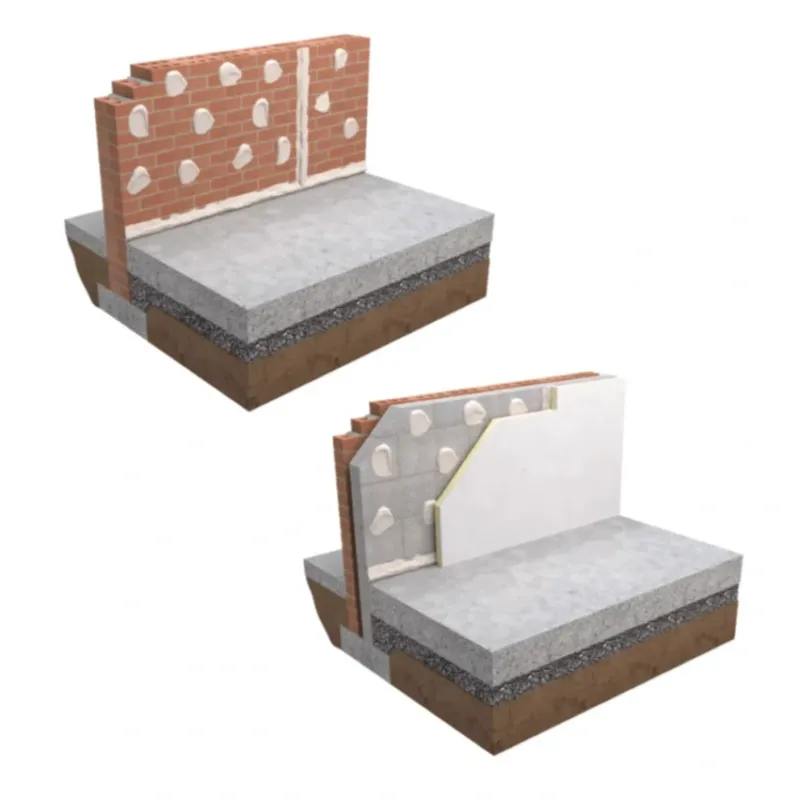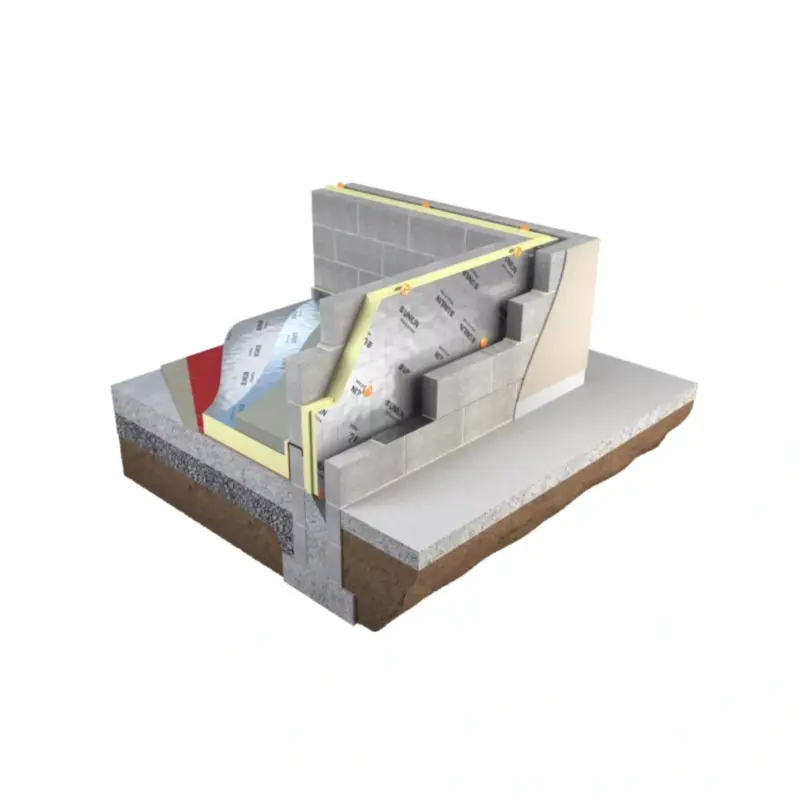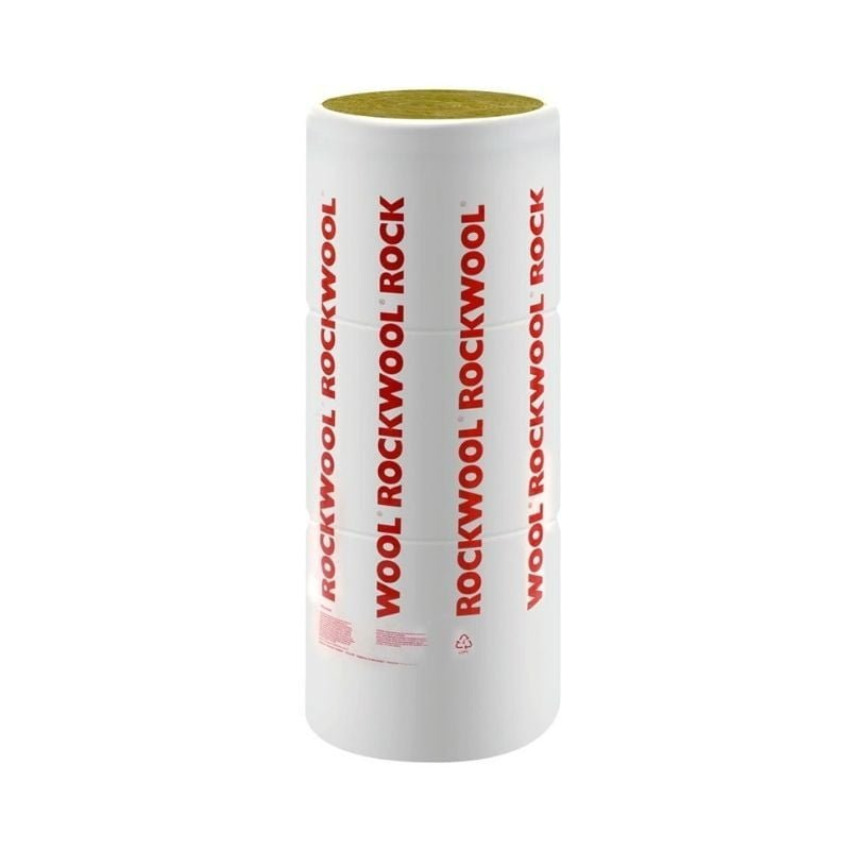
ROCKWOOL Thermal Loft Insulation stone wool does not burn and, according to the official test classification, is assumed to make no contribution to fire growth.
Rockwool Roll insulation is semi-perforated, guiding the user to accurate cut widths of 400mm, 600mm or 1200mm from one product.
This insulation is a medium-density, multi-use insulation mat suitable for thermal insulation of roof spaces in domestic, commercial and industrial buildings.
It is also useful for improving the acoustic performance of suspended ceilings.
The Rockwool Insulation is a multi-application insulation for domestic and commercial applications.
It has a thermal conductivity (K Value) of 0.044 W/mK and is suitable for roof spaces in all types of buildings or for overlaying ceiling tiles in suspended ceilings.
This product is also fire resistant.
Key Features
- Multi-application insulation product
- Very light and easy to handle
- Excellent fire, thermal and acoustic properties
- Higher density provides a superb fit
- Excellent thermal insulation performance
Standards & Approvals
- Conforms to BS EN 13162:2001 – Specification for Factory-Made Mineral Wool Products.
- Achieves a Euroclass A1 reaction to fire classification in accordance with BS EN 13501-1.
Performance & Properties
Acoustic Performance
The incorporation of Rockwool Roll within suitably designed constructions can provide improved levels of sound reduction.
Compatibility
Rockwool will not react with metal components in the loft and will not cause loss of plasticiser from PVC cables and pipes.
Water Tanks
Insulation should not be placed directly beneath cold water tanks. Where access is required, supports should be provided for a raised walkway.
Loft Hatches
To preserve continuity of insulation, loft hatch covers should be insulated with a minimum thickness of 100mm Rockwool Roll. Double-sided adhesive tape may be used to hold the insulation in place.
Electrical Cables
The IEE Wiring Regulations (BS 7671) and the latest Electricians' Handbook provide guidance on correction factors for down-rating cables according to their installation circumstances. Each case should be calculated individually.
Wherever possible, electrical cables should be lifted free of the insulation.
Handling & Storage
Rockwool Roll is lightweight and easy to handle. It is supplied compressed in polyethylene wrapping that provides short-term protection. For long-term storage, the roll should be kept indoors or under waterproof covering.
Environmental Information
Rockwool insulation relies on entrapped air for its thermal properties. Air is not a VOC and has neither Global Warming Potential (GWP) nor Ozone Depleting Potential (ODP).
Thermal Performance
Rockwool Roll has a thermal conductivity (K Value) of 0.044 W/mK.
Installation
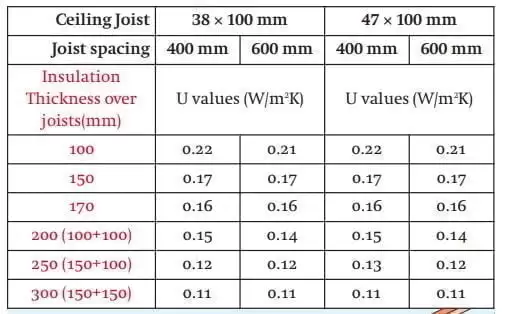
Part L (2006 Edition) requires new pitched roofs with loft spaces to achieve U-values between 0.16 and 0.11 W/m²K.
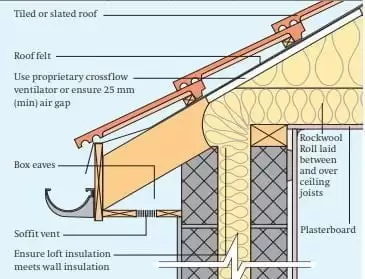
To meet this performance and minimise heat loss through the timbers, Rockwool Roll should be cross-layered between and over the ceiling joists.
The first layer (typically 100mm thick) is rolled between ceiling joists, which are normally spaced at 400mm or 600mm centres.
A second layer (for example, 170mm thick) is then laid perpendicular to cover both the first layer and the ceiling joists.
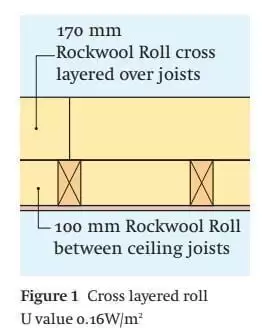
When upgrading loft insulation, check whether the existing insulation between joists is tightly butt-jointed to the sides of the timber.
If not, remove and replace it as described above. If the existing insulation remains in good condition, cross-layer it with a minimum of 170mm Rockwool Roll.
U-Values
The table below shows the additional thickness of Rockwool Roll required when 100mm insulation is installed between joists.
Health & Safety
Current HSE CHIP Regulations and EU Directive 97/69/EC confirm the safety of Rockwool mineral wool. Rockwool fibres are not classified as a possible human carcinogen.
The maximum exposure limit for mineral wool is 5mg/m³ as an 8-hour time-weighted average.